
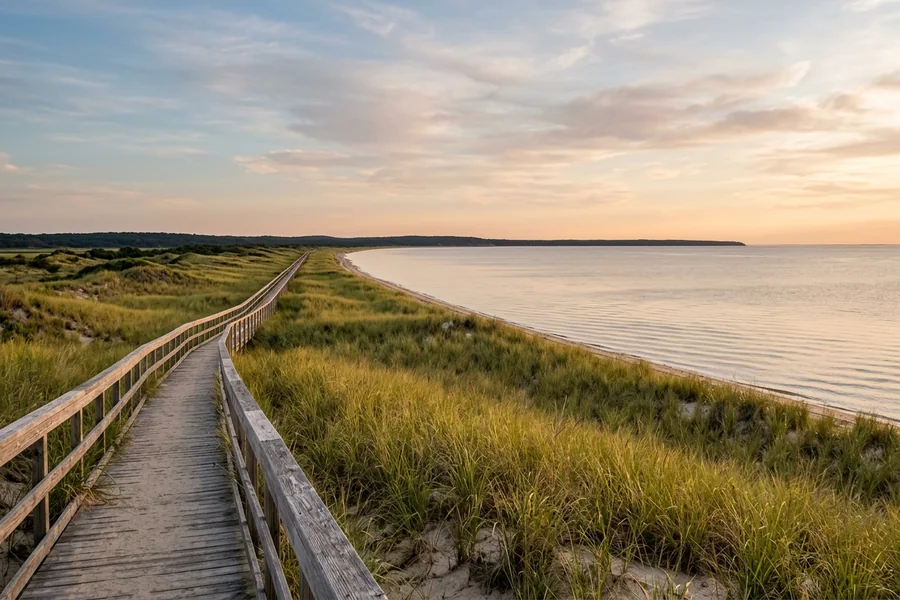
Long Island stretches roughly 118 miles east from New York City, ending in two slim peninsulas known as the North Fork and the South Fork. Travelers often think of it as a single destination, but the island covers several very distinct experiences.
This guide walks through the main regions, the kinds of trips each one suits, and the practical details that help first-time visitors plan the right stay.
The Shape of the Island
From west to east, Long Island moves through dense suburbs, then shifts into open farmland, vineyards, and beach towns. The eastern end is where most leisure travel is concentrated.
Driving the length of the island takes most of a day without traffic, so most visitors pick one or two regions and stay close to them. Rail, bus, and ferry connections cover the main corridors well.
The South Fork and the Hamptons
The South Fork is widely known for the Hamptons, a stretch of villages that includes Southampton, East Hampton, Amagansett, and Montauk. The coastline here faces the Atlantic directly, and the beaches are wide, soft, and dune-backed.
Each village has its own personality, from the historic grid of Southampton to the surf-town feel of Montauk at the eastern tip. Travelers planning a longer visit often look for coastal rental homes on Long Island as a base rather than hopping between hotels.
Peak Season on the South Fork
Memorial Day through Labor Day is the busy stretch. Reservations fill up, parking permits are enforced at the beaches, and traffic along Montauk Highway slows on summer Fridays.
Shoulder seasons in May and September are quieter and are often cited as the sweet spot for travelers who want the scenery without the social density.
The North Fork and Wine Country
The North Fork runs parallel to the Hamptons but has a different rhythm. It is agricultural, with vineyards, orchards, and farm stands rather than the social scene of the South Fork.
Around 50 vineyards operate across the region, concentrated between Cutchogue and Southold. Merlot is the signature local red, with Cabernet Franc and Sauvignon Blanc also widely planted.
What a North Fork Weekend Looks Like
Most visitors spread a weekend across three or four vineyards, breaking up the tastings with meals and farm-stand stops. Route 25 strings most of the activity together along a single corridor.
Greenport is the main village and sits right on the water, with a historic carousel, a ferry to Shelter Island, and casual seafood restaurants along the harbor.
The Western Island and the North Shore
Closer to New York City, the North Shore has a very different feel. It is lined with coves, small harbors, and historic estates dating from the early twentieth century.
Oyster Bay, Cold Spring Harbor, and Port Jefferson are the villages most travelers pass through. Several of the estates are open to the public as museums and gardens.
Fire Island
Fire Island is a long barrier island running parallel to the South Shore. It has no cars in most of its communities, so travel inside the island is on foot, by bike, or by small ferry.
The vibe is distinctly beach-cottage, with wooden boardwalks connecting the hamlets. Ferries from Bay Shore, Sayville, and Patchogue bring visitors across the Great South Bay.
Food on Long Island
Seafood is central to the local food scene, with oysters, scallops, and striped bass appearing on menus up and down the island. The North Fork oyster farms run tours and tastings during warmer months.
Farm stands line the main roads from June through October, selling corn, berries, and tomatoes within hours of picking. Many of the North Fork vineyards also pair tastings with light food menus on their patios.
Getting Around
A car is practical for exploring beyond the main village centers, especially on the forks. The Long Island Rail Road connects most towns to New York City, and the Hampton Jitney runs direct buses to the South Fork.
Within a single village, walking covers most of what you need. Rideshare is reliable across the western and central island, with lighter coverage in the far eastern hamlets.
Picking a Region for Your First Visit
Travelers coming for beaches tend to pick the South Fork. Those who prefer vineyards, farm stands, and quieter villages often choose the North Fork. The North Shore and Fire Island each suit a different kind of trip again.
With so many regions on one island, matching the stay to the right stretch of coastline makes the biggest difference in how a first visit lands.

Hi, I’m Tony — a passionate blogger with over 3 years of experience in writing informative and accurate content. I specialize in sharing practical insights on sizes, measurements, and spatial guides to help readers make confident decisions. Through DimensionsPoint.com, I aim to simplify complex data into easy-to-understand content that’s reliable, useful, and SEO-friendly.
When I’m not writing, I’m researching the latest trends in measurement standards and user needs to keep my content relevant and up to date.