
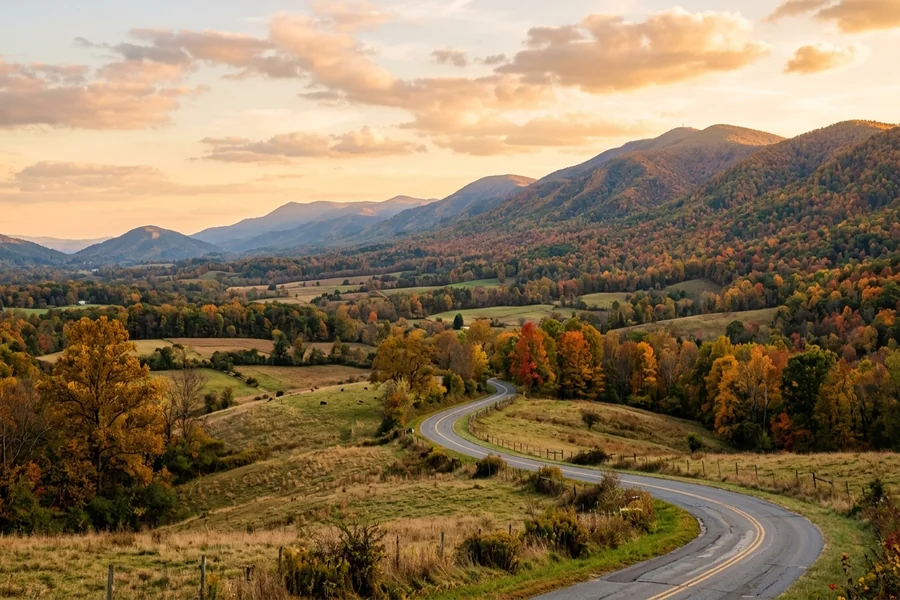
Shenandoah Valley stretches roughly 200 miles along the western edge of Virginia, cradled between the Blue Ridge and Allegheny ranges. It is a corridor of farms, caverns, river bends, and small towns that still move at the pace of their main streets.
This guide covers the practical pieces of planning a visit: the scenic routes, the trails that fit different fitness levels, and the towns worth a longer stop.
How the Valley Is Laid Out
Interstate 81 runs the full length of the valley, with Route 11 (the old Valley Pike) threading through the historic towns beside it. Skyline Drive sits above on the Blue Ridge, inside Shenandoah National Park, and connects at its southern end to the Blue Ridge Parkway.
Most trips use one of three bases: Winchester or Front Royal in the north, Harrisonburg or Staunton in the middle, or Lexington near the southern end. Driving the full length takes about three hours without stops, so day trips in any direction are realistic.
Driving Times to Keep in Mind
Front Royal to Luray is roughly 30 minutes. Harrisonburg to Staunton is about 40 minutes. Lexington to Natural Bridge sits at 15 minutes. These short hops are what make the valley easy to explore across a long weekend.
Scenic Drives Worth the Time
Skyline Drive runs 105 miles the full length of the national park, with 75 overlooks and a 35 mph speed limit. Plan on four to five hours end to end if you stop at even a fraction of the viewpoints.
For a shorter outing, Route 211 between Luray and Sperryville crosses Thornton Gap and swaps the valley floor for ridge-top views. Fall color peaks here in the second and third weeks of October.
If you prefer back roads to parkways, scenic byways like Route 42 south of Harrisonburg wind past Mennonite farms, produce stands, and covered bridges. You can find accommodations in the Shenandoah Valley close to several of these routes, which keeps morning drives short.
Trails for Different Fitness Levels
Shenandoah National Park has more than 500 miles of trails. A handful of hikes cover the highlights without demanding a backcountry mindset.
Short and Easy
Dark Hollow Falls is a 1.4-mile round trip from mile 50.7 on Skyline Drive, with a short but steady climb back to the parking area. Stony Man Overlook, at mile 41.7, delivers a sweeping view after just 1.6 miles total.
Moderate Half-Day Hikes
Old Rag Mountain is the valley’s signature scramble, running 9.4 miles with a rock section near the summit. Permits are required between March and November, bookable in advance. White Oak Canyon offers a quieter alternative, with waterfalls stacked along a 4.6-mile out-and-back from the lower lot.
Full-Day and Overnight Options
The Appalachian Trail crosses the park for 101 miles. Weekend backpackers often use the Rockfish Gap, Loft Mountain, or Big Meadows access points for two or three night loops, with first-come-first-served shelters along the way.
Small Towns to Build a Day Around
Staunton, in the heart of the valley, is anchored by its restored Victorian storefronts and the American Shakespeare Center at the Blackfriars Playhouse. Shows run most evenings, including weekend matinees.
Lexington is quieter and more academic, built around Washington and Lee University and the Virginia Military Institute. The downtown is walkable in an afternoon, with the Stonewall Jackson House, independent bookstores, and cafes open late enough for a slow dinner.
Luray, closer to the national park, is useful as a staging point. The caverns are worth the hour-long tour, and the town has enough breakfast spots to feed a group before an early trail start.
When to Go
Spring (April to early June) brings waterfalls at full volume and wildflowers on the lower trails, with lighter crowds through the week. Summer stays comfortable at elevation but humid on the valley floor, with afternoon thunderstorms common in July and August.
Fall color is the peak season, running from early October at the highest ridges down to the valley floor by early November. Winter is quiet, with Skyline Drive occasionally closed after snow, and small-town festivals in December that stand in for the summer crowds.
Shenandoah rewards travelers who build in margin: slow drives, long lunches, and more trail time than they thought they wanted. Three days is enough for a first visit, and most people come back for a fourth.

Hi, I’m Tony — a passionate blogger with over 3 years of experience in writing informative and accurate content. I specialize in sharing practical insights on sizes, measurements, and spatial guides to help readers make confident decisions. Through DimensionsPoint.com, I aim to simplify complex data into easy-to-understand content that’s reliable, useful, and SEO-friendly.
When I’m not writing, I’m researching the latest trends in measurement standards and user needs to keep my content relevant and up to date.