
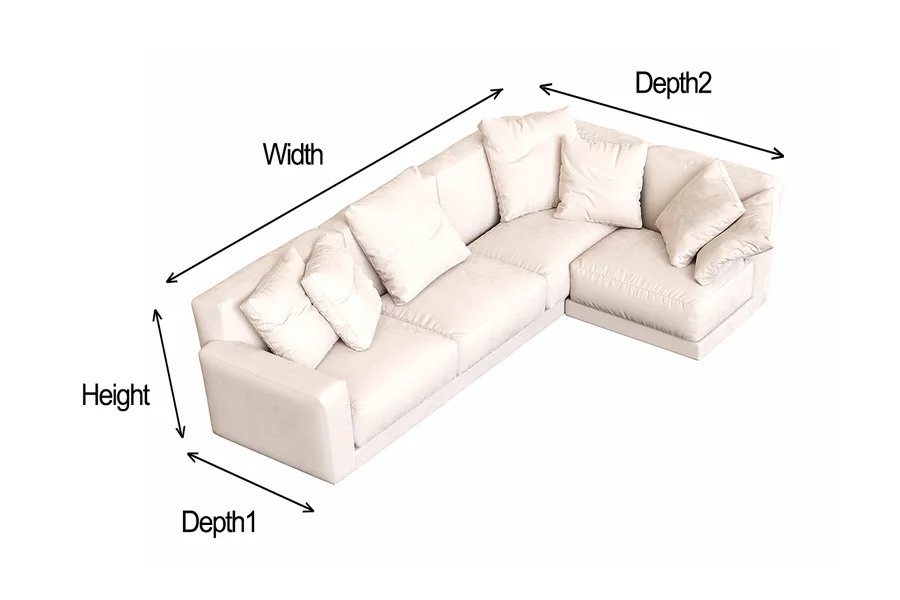
Furniture dimensions decide whether a piece fits your room or blocks your doorway. The size is incorrect and the sofa winds up in the hallway or the bed consumes the entire bedroom. Do it correctly and each room will seem to be balanced and easy to maneuver around.
The majority of people look for furniture in terms of style first. Size is secondary, if it is a factor. A table can be too tall for the sofa or a dining table can be so big you can’t pull chairs out. Before you purchase furniture, you should familiarize yourself with the standard furniture sizes so you can avoid returns, loss of money & rooms that just don’t feel right.
This guide takes you on a tour of the actual furniture you purchase most. Sofas. Beds. Tables. Desks. All the tools to measure with assurance.
What Are Furniture Dimensions?
Furniture dimensions are simply the length, width, and height of a piece, usually in inches. Every listing gives you three numbers, and those three numbers are really the only thing standing between “it fits perfectly” and “we have to return it.”
A typical sofa, for instance:
- Length: about 84 inches
- Depth: about 35 inches
- Height: about 33 inches
That’s it. That’s the whole story of whether it belongs in your living room.
Retailers list these numbers because furniture shopping used to be a leap of faith. Now it isn’t. You measure your space, you check the listing, and you know before the truck ever shows up.
What Do Furniture Dimensions Look Like in Real Life?
Numbers on a page don’t mean much until you’ve stood next to them.
- A queen bed is 60 inches wide — picture two adults lying side by side with just enough room not to bump elbows.
- A dining chair is around 18 inches wide. Line up four of them around a table and you’ll see why most dining tables need at least 36 inches of width before things start feeling elbow-to-elbow.
- A credit card’s height (2.1 inches) is roughly the thickness of a folded throw blanket — a small but handy visual reference for tight spaces.
Honestly, the fastest way to “see” a dimension is with painter’s tape. Mark the footprint on your floor. Walk around it. The number stops being abstract the second you can step over it.
Furniture Dimensions Chart (Quick Reference)
| Furniture Piece | Standard Width | Standard Depth | Standard Height |
| Sofa (3-seater) | 78–84 in | 33–38 in | 30–36 in |
| Loveseat | 52–64 in | 33–38 in | 30–36 in |
| Dining Table | 36–40 in | 60–96 in (length) | 28–30 in |
| Coffee Table | 36–48 in | 18–24 in | 16–18 in |
| Queen Bed | 60 in | 80 in (length) | 14–25 in |
| King Bed | 76 in | 80 in (length) | 14–25 in |
| Nightstand | 18–24 in | 16–18 in | 22–28 in |
| Bookshelf | 30–36 in | 12–14 in | 60–72 in |
| Office Desk | 42–60 in | 24–30 in | 29–30 in |
| Dining Chair | 16–20 in | 16–20 in | 32–36 in |
These are the ranges you’ll see across most retailers. Custom pieces can fall outside them, so always double check the exact listing before you order.
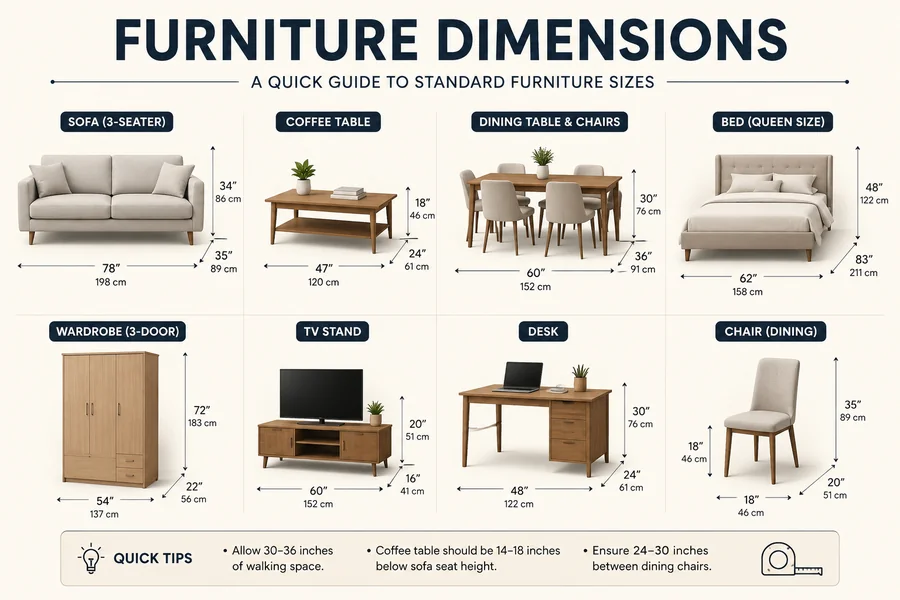
Standard Furniture Measurements for Common Pieces
Here’s where it gets useful. Below are the pieces people search for most, with the furniture dimensions that actually matter when you’re staring at a tape measure trying to decide if something will work.
Sofa Dimensions
- Length: 78–84 in
- Depth: 33–38 in
- Height: 30–36 in
That’s the range you’ll see over and over, from budget brands to high-end showrooms.
Depth is the number people forget to check. A deep sofa feels great to sink into, but it can swallow a small living room whole. Anything around 35 inches deep is usually the safest middle ground.
One thing worth doing before you order: measure your front door, hallway, and any tight turns. A sofa that fits your living room perfectly can still get stuck getting there.
Dining Table Dimensions
- Length (seats 4–6): 60–78 in
- Width: 36–40 in
- Round table (seats 4): 42–48 in diameter
The real trick is clearance, not just tabletop size. Give each seated person about 24 inches of table space, then add 36 inches behind every chair so someone can walk by without squeezing past.
Quick way to figure out your max table size: measure your dining room’s width, then subtract 36 inches from each side. Whatever’s left is roughly what you can fit.
Bed Dimensions
- Twin: 38 in wide × 75 in long
- Full: 54 in wide × 75 in long
- Queen: 60 in wide × 80 in long
- King: 76 in wide × 80 in long
- Height (frame + mattress): 14–25 in
Height is where beds vary the most. If you’ve ever had to hop up onto a bed, you know this number matters more than people think.
Leave about 24 inches of walking room on each side and at the foot of the bed. Otherwise your dresser drawers and closet doors won’t fully open.
Coffee Table Dimensions
- Length: 36–48 in
- Depth: 18–24 in
- Height: 16–18 in
Ideally, height should sit within an inch or two of your sofa’s seat cushion. Get it wrong and the table either disappears below your knees or juts up and blocks the room’s sightline.
Between the sofa and the table, aim for 14 to 18 inches of legroom. Enough to stretch out, not so much that you’re leaning forward to reach your coffee cup.
Nightstand Dimensions
- Width: 18–24 in
- Depth: 16–18 in
- Height: 22–28 in
The goal is a surface that sits level with, or just below, your mattress top. Too short and you’re fumbling in the dark for your phone. Too tall and the drawers become annoying to open from bed.
Bookshelf Dimensions
- Width: 30–36 in
- Depth: 12–14 in
- Height: 60–72 in
Depth is the number to watch — most books need at least 10 to 12 inches or they’ll hang over the edge.
Taller shelves save floor space but really do need to be anchored to the wall, especially with kids or pets around. If you collect oversized art books or cookbooks, don’t trust the 12-inch standard — measure your biggest book first.
Office Desk Dimensions
- Width: 42–60 in
- Depth: 24–30 in
- Height: 29–30 in
That height lines up with most standard office chairs for a comfortable typing angle. Width really comes down to your setup — a single monitor is fine at 42 inches, but add a second monitor and you’ll want closer to 60 inches before things feel cramped.
Behind the chair, leave at least 36 inches so you can actually push back and stand without hitting a wall.
TV Stand Dimensions
- Width: 48–65 in
- Depth: 16–20 in
- Height: 20–25 in
As a rule, the stand should be at least as wide as your TV’s diagonal screen size — narrower than that and the setup starts looking top-heavy, even when it’s perfectly sturdy.
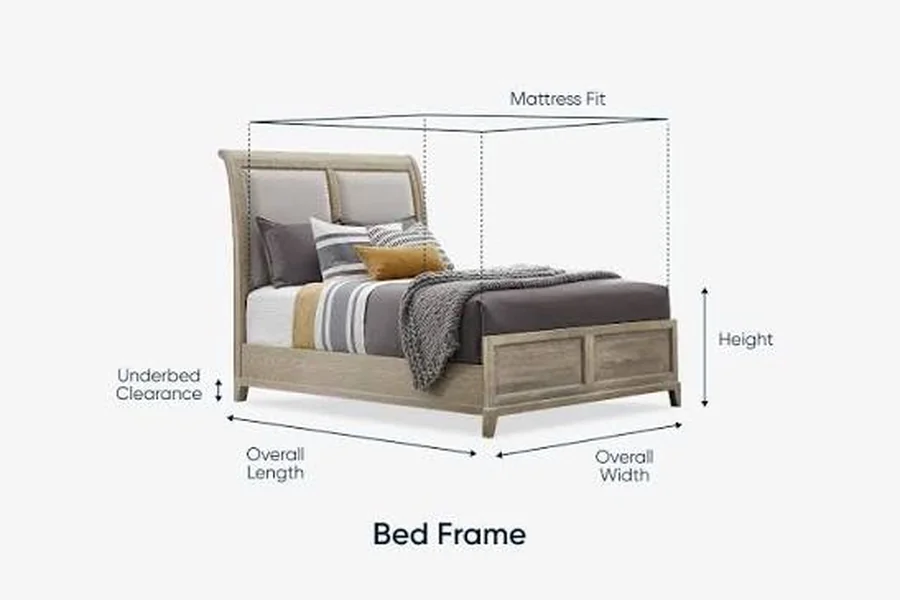
How to Measure Furniture Dimensions Correctly
Start with the room, not the furniture. Measure the length and width of the space, then note every doorway, staircase, and hallway the piece has to travel through to get there.
Then measure the furniture itself:
- Width (side to side)
- Depth (front to back)
- Height (floor to top)
Don’t estimate from product photos. Camera angles are notorious for making a loveseat look like a full sectional.
Painter’s tape is still the best trick in the book. Outline the footprint right on your floor before you buy anything. Walking around that outline tells you more in thirty seconds than any spec sheet will.
Why Furniture Dimensions Matter in Real Life
Do it wrong and you pay! If a sofa doesn’t fit through the front door, it’s back to the drawing board, restocking and in an afternoon you won’t get back. If your dining table is too large, it is impractical for people to walk around it, and you’ll find yourself playing musical chairs at every meal.
Not only does it have to fit through the door, it has to fit through the door to a room that’s not just a big hole. If the bed is raised too high, it will be difficult to get in and out of. A desk that’s too low results in a sore back by 3 p.m. These are not spectacular issues, but they’re the ones which aggravate you every day.
Learn the standard furniture dimensions before you shop, and buying furniture stops being a gamble.
FAQs:
What are standard furniture dimensions?
They vary by piece, but common examples include an 84-inch sofa, a 60-inch queen bed, and a 36-inch-wide dining table.
How do I know if furniture will fit my room?
Measure your room’s width, length, and doorway clearance, then compare those numbers against the furniture’s listed dimensions before you buy.
What is the standard height for a coffee table?
Around 16 to 18 inches — close to the height of most sofa seat cushions.
How much space should I leave around furniture?
Aim for 24 to 36 inches of walking clearance around major pieces like beds, sofas, and dining tables.
Conclusion
Furniture dimensions aren’t just numbers on a spec sheet. They determine the way a room feels to be in, how you can navigate a room, and whether your Saturday delivery runs smoothly or becomes a stand-off at the door. Find out the correct dimensions of sofas, beds, tables, and desks and no more furniture shopping is guesswork.
Have a tape measure handy by the door. Always measure furniture dimensions listed. If needed, then tape it out on the floor first.

Hi, I’m Tony — a passionate blogger with over 3 years of experience in writing informative and accurate content. I specialize in sharing practical insights on sizes, measurements, and spatial guides to help readers make confident decisions. Through DimensionsPoint.com, I aim to simplify complex data into easy-to-understand content that’s reliable, useful, and SEO-friendly.
When I’m not writing, I’m researching the latest trends in measurement standards and user needs to keep my content relevant and up to date.