
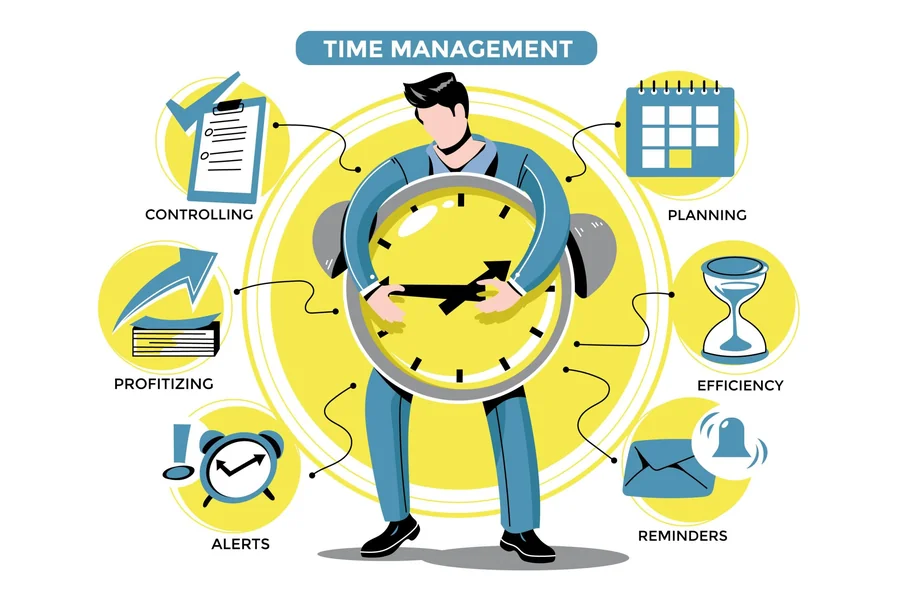
Time management refers to organizing and prioritizing your activities in order to get more done without wearing yourself out. This involves having definite objectives, identifying what’s important and scheduling time for doing some serious work. It does not involve increasing the number of hours in a day but ensuring that you use your time well. When it works, you will be able to finish most days in control rather than feeling exhausted.
Why Your Schedule Keeps Falling Apart
Here’s the thing most productivity advice gets wrong: it blames you for lacking discipline. Usually that’s not the issue at all. The real problem is a plan that was unrealistic from the first hour.
Sound familiar? You write ten tasks on a list, get pulled into email for forty-five minutes, and by lunch you’ve knocked out maybe two things. That’s not a motivation problem. That’s a planning problem.
A few things tend to wreck a daily schedule:
- You guess how long a task will take, and you guess wrong
- Every item on the list gets treated as equally urgent, even when it isn’t
- Interruptions never make it into the plan, so the plan breaks the moment one shows up
- You bounce between three tasks instead of finishing one
Once these patterns are visible, fixing them gets a lot easier.
Build a Plan Before the Day Builds Itself for You
A good plan doesn’t need fifteen steps. Honestly, the shorter it is, the more likely you’ll actually follow it.
Before opening email or Slack, take five minutes and write down what has to happen today. Not everything you’d like to do — just three to five things that genuinely move the needle. Ten items is a wish list. Four items is a plan.
Doing this first thing means you’re setting the agenda instead of reacting to whatever landed in your inbox overnight. Some people do this the night before instead, which works just as well and tends to make mornings feel calmer.
Sort Tasks Before You Touch Them
Not every task on your list deserves the same energy. Treat them all as equal and you’ll end up polishing a low-stakes email while a real deadline slips.
A quick filter: ask whether something is urgent, and separately, whether it’s important. Urgent and important tasks go first, no debate. Important-but-not-urgent tasks need to get scheduled, because “later” has a way of becoming “never.” Urgent-but-not-important tasks can often be handed off or trimmed down. And the rest? Drop them without feeling guilty about it.
This sorting takes maybe ten minutes. Skip it, and you’ll lose hours to work that felt busy but didn’t actually matter.
Distractions Are Quietly Stealing Your Day
Even a good plan can come undone quickly without protecting your mind. All of these things which seem inconsequential at the time, such as notifications, meetings with no agenda, etc. add up.
Instead of checking emails and messages immediately upon arrival, check at set times throughout the day (2 or 3). Mute notifications in the scheduled time of concentration. And if meetings keep going long or don’t get anywhere, push back — you should ask for an agenda before the meeting or ask for a shorter meeting.
None of this is “p Amphibia”. Saving your time is generally more worthwhile than saving your calendar.
Stop Multitasking, Start Time Blocking
Multitasking is a way of thinking that makes you feel like you’re doing work but you’re not. Your brain takes time to readjust each time you change tasks. Ten times an hour equals real time spent, and that may not feel like it to you, but it is.
Instead, choose one task and set the timer for 25-50 minutes and only work on that task until the timer rings. Take a short break. Skip to the next activity. This is time blocking—and it works because your attention remains in one place rather than being sliced up!
There’s a bonus, too, you’ll notice that you become much better at estimating how long things take after a few weeks of this and your plans for tomorrow will be more accurate than those for today.
Small Habits Beat One Big Overhaul
Nobody fixes their time management in a single day, and trying to is usually what causes people to give up by week two. This is a habit-building project, not a one-time fix.
A few worth adopting:
- Spend two minutes each evening reviewing what worked and what didn’t
- Keep your task list somewhere you’ll actually see it, not buried in an app you forget to open
- Leave buffer time in your schedule for the interruptions that will inevitably show up
- Protect time to rest — skip this and you’ll undo whatever productivity you gained
None of these habits are exciting. But repeated daily, they matter more than any single burst of motivation ever will.
Final Thought
None of this is about squeezing extra tasks into your day. It’s about using the hours you already have on purpose instead of by accident. Start with a short daily plan, sort your tasks honestly, cut the distractions that don’t earn their place, and give focused blocks a real try instead of bouncing between five things at once.
You don’t need a fancy app or a new planner system to make this work. You need to keep doing it, and adjust when something isn’t clicking. Stick with it for a month, and you’ll notice the difference — not just in what gets done, but in how much time is left over for the stuff you actually care about.

Hi, I’m Tony — a passionate blogger with over 3 years of experience in writing informative and accurate content. I specialize in sharing practical insights on sizes, measurements, and spatial guides to help readers make confident decisions. Through DimensionsPoint.com, I aim to simplify complex data into easy-to-understand content that’s reliable, useful, and SEO-friendly.
When I’m not writing, I’m researching the latest trends in measurement standards and user needs to keep my content relevant and up to date.