
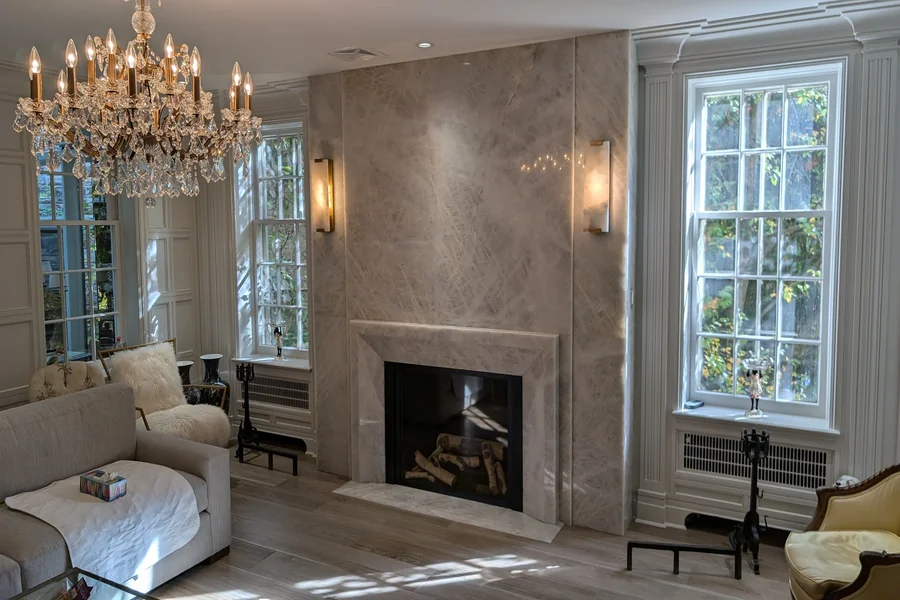
A stone fireplace wall is one of the most visible things in a living room, and one of the easiest to get wrong if it is treated as decoration added at the end. The stone is the part everyone sees. The planning behind it — the wall, the weight, the heat and the layout of the slabs — is what decides whether it looks right and stays that way.
Start with the wall, not the slab
Large stone pieces are heavy. Marble panels for feature walls can weigh around 250 kg each, and they have to be fixed to a structure that can carry that load for decades. That means the framing behind the fireplace needs to be planned for stone from the start: proper backing, the right fasteners and mechanical support, not adhesive alone.
If the fireplace is already built and finished in drywall, it is worth opening a section to check what is behind it before ordering slabs. Discovering a weak wall after fabrication is far more expensive than checking first.
Heat and clearances
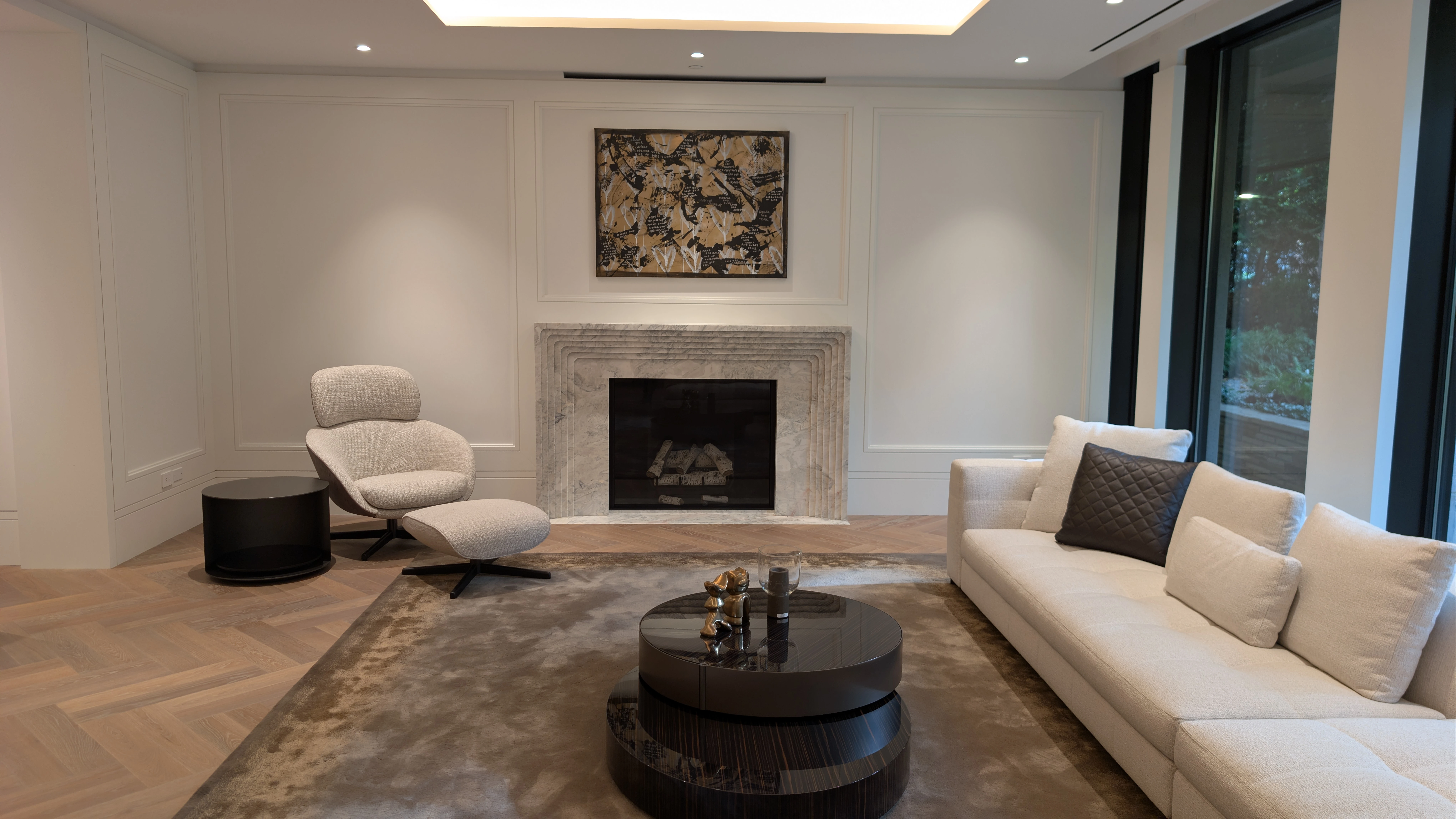
Every fireplace insert comes with the manufacturer’s required clearances to combustible materials. Stone itself does not burn, but what holds it and what sits around it might. The installer should work from the insert’s installation manual, not from a typical drawing, and the stone layout should respect those clearances around the opening, the mantel and any TV mounted above.
Gas and electric inserts are a separate trade. The stone work is the surround; the fireplace unit, gas line and venting belong to a licensed installer, and the two should be coordinated before anything is cut.
Slab layout is where the design happens
A floor-to-ceiling surround is rarely one piece. The question is how the pieces meet.
- Bookmatching uses two slabs cut from the same block and opened like a book, so the veining mirrors across a centre line. It needs slabs that were cut in sequence, and it needs to be planned before ordering.
- Vein matching across a corner or around the firebox makes the wall read as one block of stone.
- Mitred edges let a thin slab look like a thick solid block on returns and hearths.
Seams are part of this layout, not something to hide afterwards. A good seam has no lippage, the pattern lines up, and the epoxy colour matches the stone. When a single piece is physically impossible — because of slab size, a narrow doorway or a stairwell — a well-placed seam is the professional solution.
Getting the stone into the room
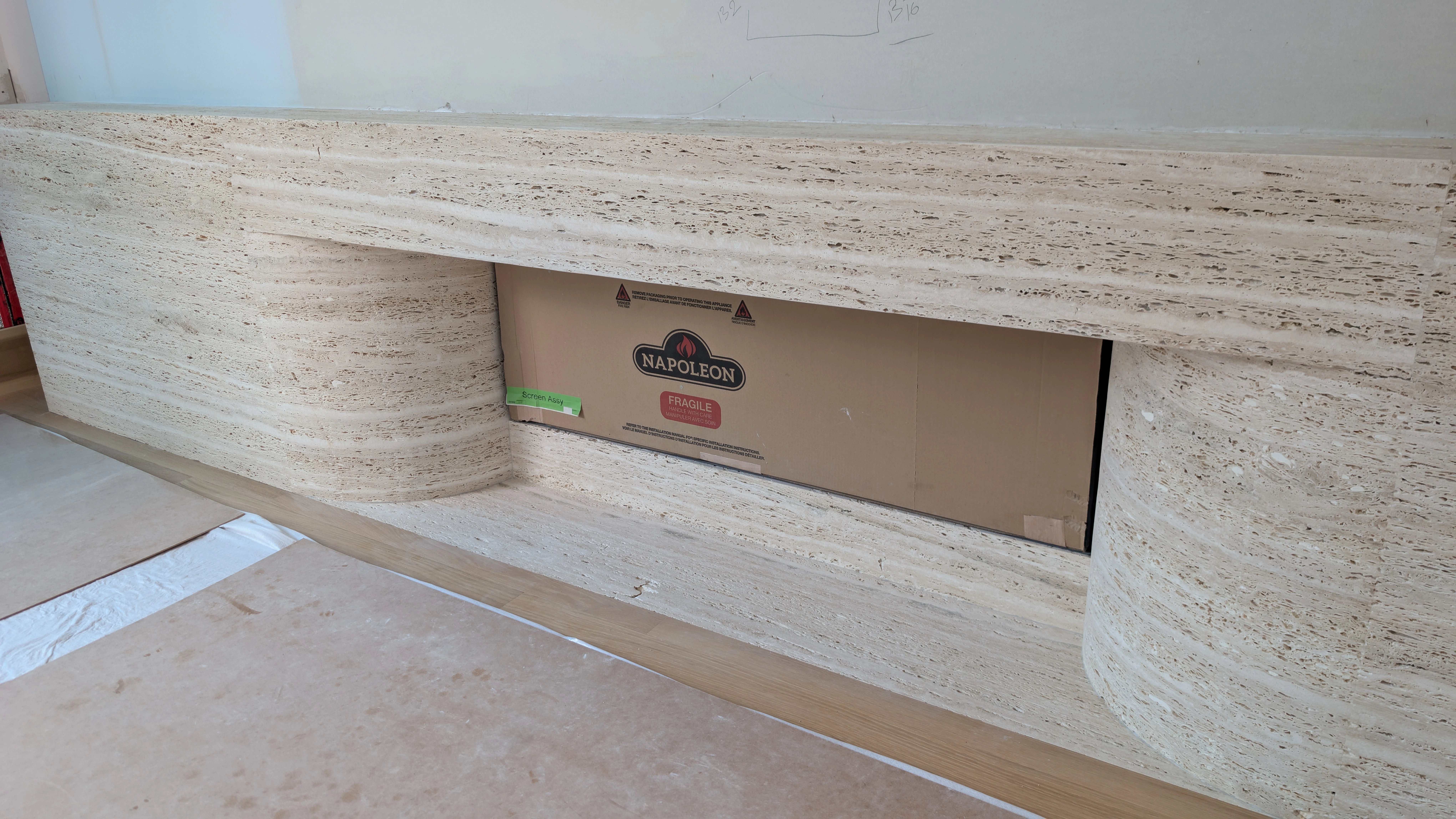
On paper a 3-metre slab fits on the wall. In reality it has to come off a truck, through a door, around corners and sometimes up stairs or into an elevator. Access should be checked before fabrication, because it can decide how many pieces the wall needs. A complete custom stone project often involves six to eight people, and difficult installations with heavy pieces or tight access can need more than ten.
Questions worth asking before you commit
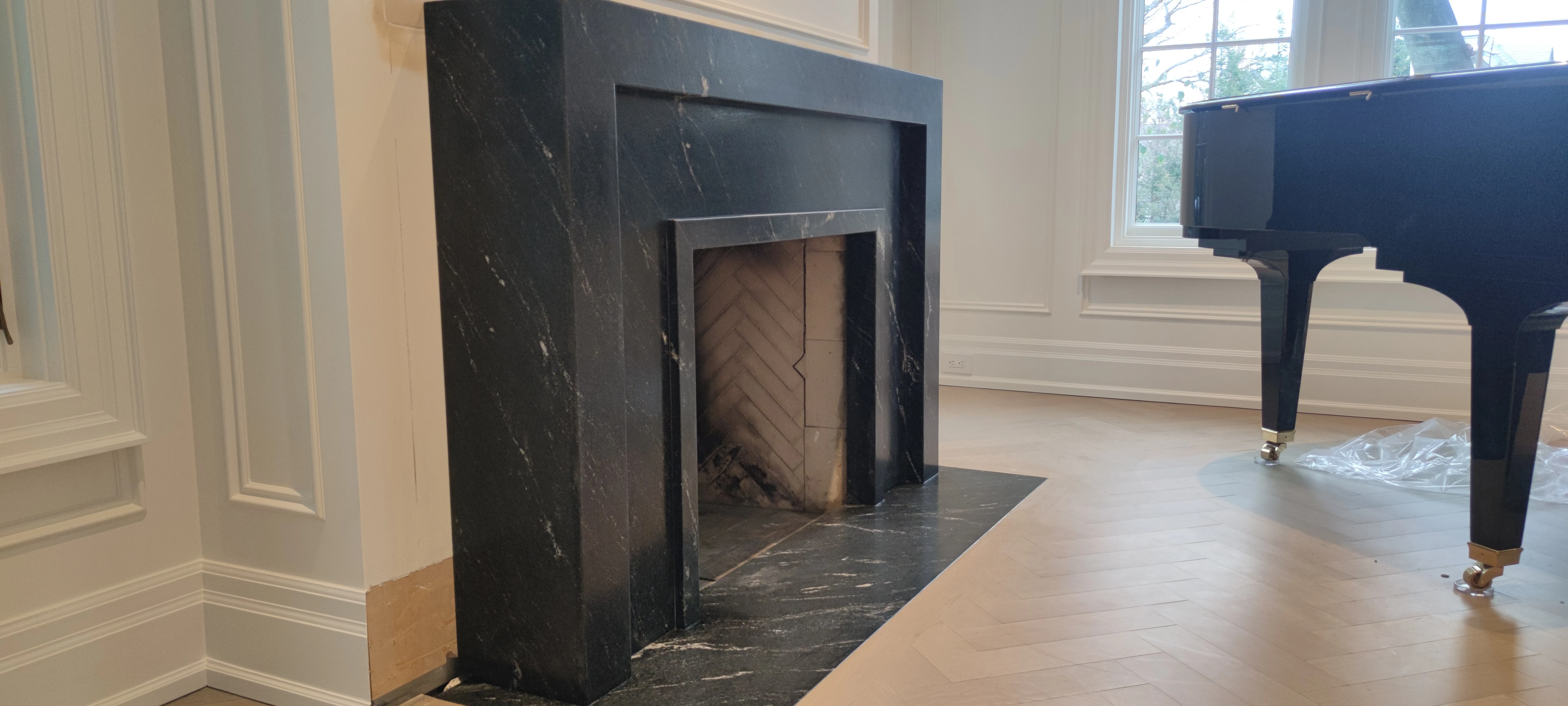
If you are comparing options for stone fireplace surrounds, ask:
- What is behind the wall, and does it need reinforcing?
- Which clearances does my insert require, and how does the layout respect them?
- Where will the seams go, and will the veining be matched?
- How will the slabs get into the house?
- Who is responsible if a measurement turns out to be wrong?
A fireplace surround planned this way becomes the calm centre of the room instead of a source of cracks, gaps and surprises.

Hi, I’m Tony — a passionate blogger with over 3 years of experience in writing informative and accurate content. I specialize in sharing practical insights on sizes, measurements, and spatial guides to help readers make confident decisions. Through DimensionsPoint.com, I aim to simplify complex data into easy-to-understand content that’s reliable, useful, and SEO-friendly.
When I’m not writing, I’m researching the latest trends in measurement standards and user needs to keep my content relevant and up to date.