
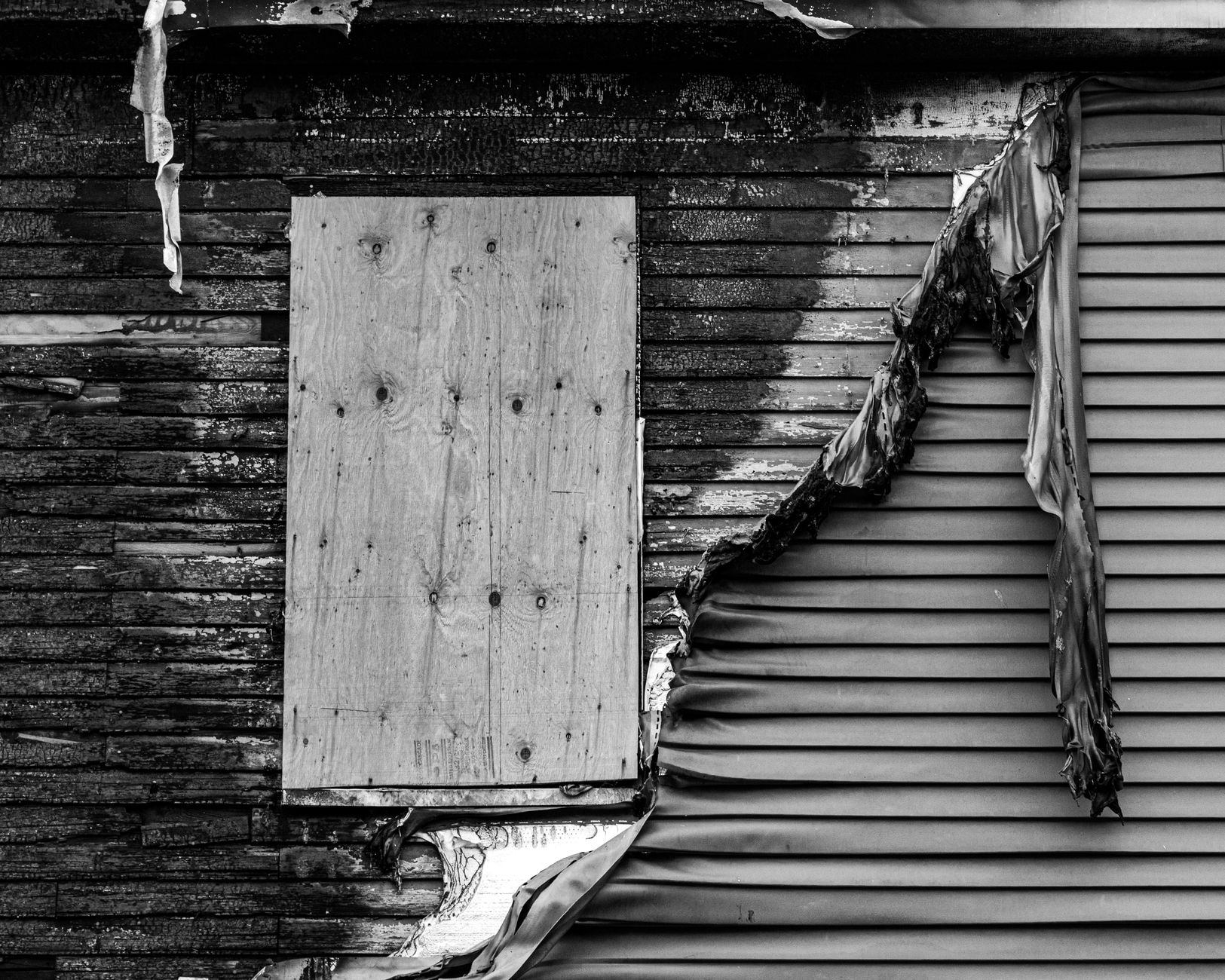
Here's a question we get constantly: "Can this be patched, or do I need the whole thing replaced?" It's a fair question, and the honest answer is it depends on exactly what kind of damage you're looking at, how far it's spread, and what's happening behind the siding where you can't see it.
Let's walk through how to tell the difference.
Start by Identifying the Damage Type
Not all siding damage is created equal, and the type of damage tells you a lot about whether a repair will actually hold up.
Impact Damage (Cracks, Holes, Dents): This is usually the most repair-friendly category. A single cracked panel from a stray baseball, hail, or a ladder mishap is often a straightforward spot repair, especially on vinyl and fiber cement siding where matching replacement panels are readily available.
Warping or Buckling: This one's trickier. Warping usually means the siding has been exposed to heat it wasn't designed to handle (a nearby grill, reflected sunlight off a window, or in some documented cases, reflective coatings on newer energy-efficient windows). If it's isolated to one or two panels, spot repair is often possible. If it's spread across a wider area, that's usually a sign of an ongoing heat source that needs to be identified before any repair, or it'll just warp again.
Rot or Water Damage: This is where things get more serious. Rot means moisture has been getting behind the siding for a while, and by the time it's visible on the surface, there's a good chance the damage extends further than what you can see. This category is the one most likely to require replacement rather than repair, because patching over active moisture damage just traps the problem instead of solving it.
Faded or Chalking Siding: This isn't really "damage" in the structural sense, it's UV wear over time. It doesn't compromise the siding's function, but it does affect appearance, and depending on the material, may or may not be something you can address without full replacement.
The Test That Tells You What's Really Going On
PRO TIP: Press firmly on the siding around any suspicious area with your palm or a screwdriver handle (not the point). If it feels soft, spongy, or gives more than the surrounding area, you're likely dealing with rot or moisture damage underneath, even if the surface still looks mostly okay. Solid, firm resistance means the damage is probably cosmetic or surface-level only.
This simple test is honestly one of the most useful things a homeowner can do before calling anyone, because it immediately tells you which conversation you're about to have: a quick patch, or a bigger repair.
When Repair Genuinely Makes Sense
Repair is usually the right call when damage is isolated to one or two panels, the surrounding material tests firm with no sponginess, the siding material is still reasonably current (not decades-old and discontinued, which makes matching panels difficult), and there's no evidence of an underlying moisture source still actively causing problems.
When Replacement Is Actually the Smarter Move
Full or partial replacement becomes the better call when damage is widespread across multiple sections, you find soft spots indicating rot has spread behind the surface, the siding material is old enough that matching replacement panels aren't available (leading to a visibly mismatched patch job), or an inspection reveals the damage traces back to a structural moisture issue, flashing failure, or ventilation problem that needs addressing at a larger scale anyway.
A Word About Insurance and Storm Damage
If your siding damage followed a hailstorm or significant wind event, it's worth having it assessed before assuming it's purely cosmetic. Hail impact can create small cracks that aren't very visible from the ground, but that compromise the siding's ability to shed water properly over time. A home siding repair Broomfield CO inspection after a storm can catch this kind of damage early, which matters both for your home's protection and for insurance purposes, since documentation shortly after the event is generally stronger than a claim filed months later once the connection to the storm is harder to establish.
What Happens If You Ignore It
Siding isn't just cosmetic, it's your home's primary defense against water getting into the wall assembly. Small cracks or gaps that seem minor now are entry points for moisture, and moisture behind siding doesn't dry out the way it would on an exposed surface. It sits there, against sheathing and framing, for potentially months at a time. What starts as a $200 spot repair can become a multi-thousand-dollar sheathing and framing repair if water intrusion goes unaddressed long enough for rot to spread into structural components.
What Actually Causes Most Siding Damage in the First Place
Understanding the common causes helps you catch problems earlier next time, before they reach the "repair vs. replace" decision point at all.
Improper Flashing Around Windows and Doors. A huge share of the moisture damage we see traces back to flashing, the material that directs water away from openings in the wall, that was installed incorrectly or has deteriorated over time. Water finds its way behind siding at these transition points more often than through the siding material itself.
Sprinkler Systems Hitting the House. This one's surprisingly common and easy to fix once identified. Sprinkler heads aimed even slightly toward the house, rather than purely at the lawn or beds, can keep a section of siding consistently damp for years, accelerating everything from mildew growth to actual material breakdown depending on the siding type.
Gutters That Aren't Doing Their Job. Clogged or improperly pitched gutters overflow directly down the side of the house rather than channeling water away, essentially giving one section of siding a constant waterfall every time it rains. If you're noticing damage concentrated below a specific section of roofline, check your gutters there before assuming the siding itself is the root problem.
Direct Sun and Heat Exposure. Especially relevant for vinyl siding, which can warp when exposed to unusually high reflected heat, from a neighboring window, a reflective grill surface, or even certain energy-efficient window coatings on your own home. This is worth investigating if warping is isolated to a specific area that gets afternoon sun or faces a reflective surface.
A Simple Annual Check That Catches Problems Early
Once a year, ideally in spring after winter weather has had its say, walk the full perimeter of your home and do the push test described above on any area that looks even slightly different from the surrounding siding, discoloration, a slight bulge, anything that catches your eye. This ten-minute annual habit is genuinely the difference between catching a small issue while it's still a cheap spot repair versus discovering it years later as a full section replacement with structural implications behind it.
Quick Reference: Repair or Replace?
|
Situation |
Likely Answer |
|
Single cracked panel, firm to the touch |
Repair |
|
Warping isolated to 1-2 panels near a heat source |
Repair (after addressing heat source) |
|
Soft, spongy spots anywhere |
Replace (at minimum that section) |
|
Widespread damage across multiple walls |
Replace |
|
Old, discontinued siding material with damage |
Replace (matching won't be possible) |
The Bottom Line
The push-test trick above will tell you more in thirty seconds than staring at the siding from across the yard ever will. If it's firm, you're probably looking at a manageable repair. If it gives at all, that's worth a closer professional look before deciding anything, because rot doesn't stay contained to the spot where it first shows up on the surface.
For a broader overview of exterior inspection points homeowners can check themselves, the International Association of Certified Home Inspectors publishes general guidance on identifying common siding and exterior wall issues.

Hi, I’m Tony — a passionate blogger with over 3 years of experience in writing informative and accurate content. I specialize in sharing practical insights on sizes, measurements, and spatial guides to help readers make confident decisions. Through DimensionsPoint.com, I aim to simplify complex data into easy-to-understand content that’s reliable, useful, and SEO-friendly.
When I’m not writing, I’m researching the latest trends in measurement standards and user needs to keep my content relevant and up to date.