
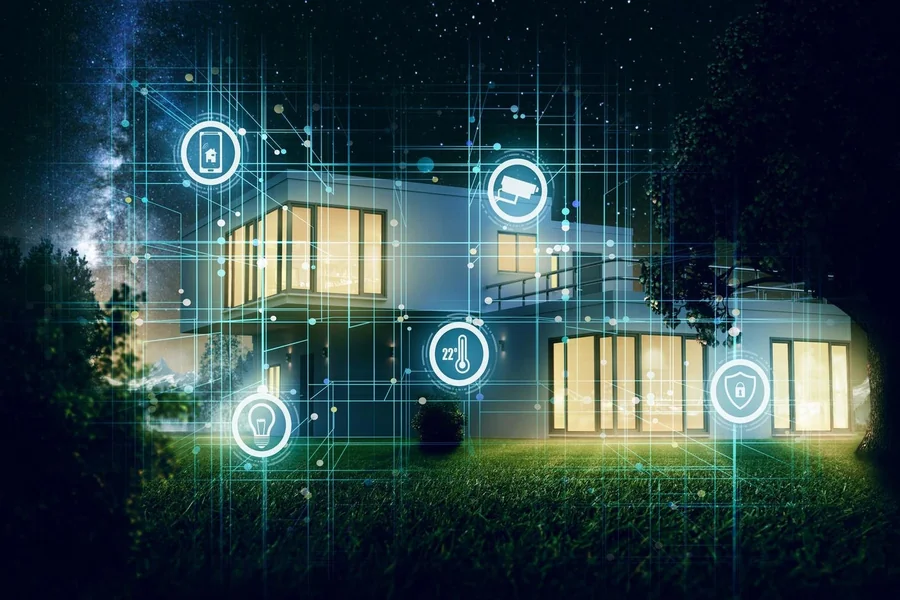
Smart home technology has revolutionized the way people connect with their homes. In fact, what was once science fiction is now becoming reality. Today, modern homes are becoming better connected, more efficient, and more convenient than ever before with lights, security, and more that are controlled by voice commands.
With the continuous development of technology, smart homes can only be more intelligent. AI, the Internet of Things (IoT) and other forms of advanced automation mean houses are becoming capable of learning about the habits of their occupants and reacting instinctively. The innovations are helping to make it more comfortable inside and helping homeowners save energy, cut costs and improve security.
This article will discuss the future of smart home technology, the latest trends in the smart home industry, the advantages homeowners can reap from this, and the challenges that remain before the industry.This article will cover the future of smart home technology, the newest trends in the smart home industry, the benefits that homeowners can enjoy from this, and the challenges that are still yet to be addressed.
Smarter Homes Powered by Artificial Intelligence
Artificial Intelligence (AI) is one of the hottest home automation technologies now. Rather than response to command, future smart devices will be able to comprehend routine, forecast need and take decision without much user input.
One instance is a smart thermostat that can sense when the family has gone to work and reduces the temperature to conserve energy. Smart lighting can be programmed to detect occupancy patterns and activate or deactivate lights throughout the day. One example of how AI-powered assistants can be deployed is to remind homeowners about maintenance tasks, grocery shopping or upcoming appointments.
As AI continues to advance, smart homes will get more and more customized. Families are all unique and will have different habits – AI will get used to this over time. This would make life more comfortable and efficient and eliminate manual adjustments.
Voice assistants will also be more conversational. Users will be able to interact with their smart home systems in a natural manner rather than instructing them with simple commands, making the overall experience much more intuitive.
The Growing Role of IoT and Connected Devices
IoT, or the Internet of Things, is a way of linking everyday devices via the internet. This network enables all sorts of appliances, security systems, lighting, entertainment devices, and household equipment to communicate with each other.
More household products will have ‘smart’ features as time goes on. Some refrigerators can automatically keep count of food items and provide a shopping list. Washing machines may run the dryer during off peak hours. Smart ovens may offer ideas for recipes that can be made with the available ingredients.
Awareness and understanding of interconnection will continue to grow. Homeowners will more likely be able to manage all from a single point instead of installing separate applications for every device. This will make things easier and make the smart home run more smoothly.
Manufacturers are getting closer to coming up with universal standard requirements, which will enable different brands of devices to communicate more effectively, offering consumers increased choice.
Enhanced Security, Energy Efficiency, and Daily Convenience
Security and convenience are some of the primary reasons people invest in smart home technology. In future systems, even more protection will be offered and daily life will be easier.
The smart security cameras will offer enhanced face recognition to figure out who’s in the family and any odd behavior. AI-powered doorbell with monitoring can differentiate between visitors, delivery drivers, pets, and intruders. Smart locks can have many authentication techniques like fingerprint, smartphone or voice recognition.
It also has the benefits of energy efficiency. A smart home can help conserve energy and water by monitoring power and water consumption in real time. There are open window sensors, heating and cooling system adjustment sensors and unused appliance turn-off sensors.
These enhancements not only reduce energy costs for homes, but are also good for the environment. As more and more emphasis is being given to energy conservation by both governments and consumers, smart home systems will come into play especially when waste is concerned.
The ease will also keep improving. Now imagine waking up to a home that gets rid of the curtains, drinks coffee, changes the temperature and reads you your schedule without needing to tell it. Such automated processes are getting extremely realistic.
Challenges and What the Future Holds
While smart home technology offers numerous advantages, it also has some disadvantages. Privacy continues to be a large issue. Smart devices gather considerable personal data such as voice recordings, usage patterns, and security data. Businesses need to keep sharing greater data protection and transparency to gain consumers’ trust.
Secure IT governance is also key. With the increasing number of connecting devices, it is important to make them safe from hacking. To ensure user security, manufacturers are making investments in more robust encryption, regular software updates, and enhanced authentication, among others.
Some families may find cost to be another barrier. While costs have dropped over time, it can be costly to make a smart home a reality. Technology is becoming prevalent and competition grows, however affordable ones will be available in the near future.
In the future, there is a possibility of smart home integration with smart cities, electric vehicles, renewable energy network, and medical monitoring services. The homes can automatically charge EV’s when electricity is lowest, and can be notified when residents are elderly and need help. These innovations have the potential to greatly enhance both the convenience and quality of life.
Final Thought
The future of smart home technology is filled with exciting possibilities. With the advent of artificial intelligence, IoT, automation and enhanced connectivity, ordinary homes are becoming smart homes capable of taking care of their residents’ needs.
Although the issues of privacy, cyber-security and cost remain, technological innovations continue to tackle these concerns. The influx of smart devices that are now more secure, accessible, and easy to use will make them an integral part of our lives in the future.
Homeowners will have more comfort, better security, efficient energy use, and a personal experience in the future. From those just getting their first smart speaker to those wanting to have a fully digitalized home, smart technology is changing the way we live today beyond what was once thought of in our dreams.

Hi, I’m Tony — a passionate blogger with over 3 years of experience in writing informative and accurate content. I specialize in sharing practical insights on sizes, measurements, and spatial guides to help readers make confident decisions. Through DimensionsPoint.com, I aim to simplify complex data into easy-to-understand content that’s reliable, useful, and SEO-friendly.
When I’m not writing, I’m researching the latest trends in measurement standards and user needs to keep my content relevant and up to date.