
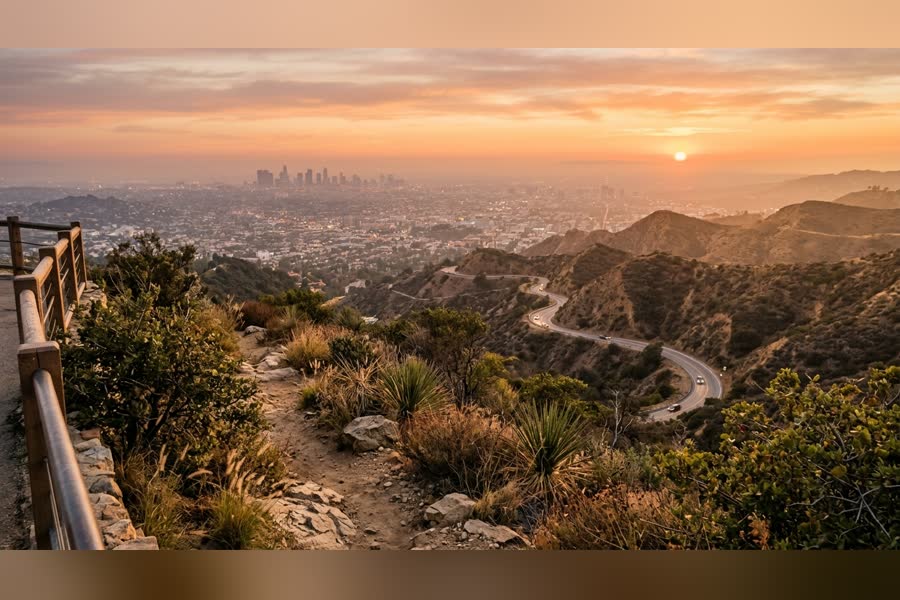
The Hollywood Hills sit above Los Angeles like a quiet balcony over the city. Winding roads, canyon trails, and panoramic overlooks give the area a very different pace than the boulevards below. Most visitors show up with a camera and leave with a short list of streets they wish they had explored sooner.
This guide breaks down the pockets most travelers ask about, when to visit, and the small logistical details that shape a trip to this corner of Los Angeles.
How the Hills Are Organized
Locals talk about the Hills as a cluster of connected neighborhoods, not one single area. The eastern side runs from the Cahuenga Pass up toward Beachwood Canyon and the Hollywood Sign. The western side stretches across Laurel Canyon toward Mulholland Drive and the quieter residential pockets near Nichols Canyon.
Beachwood Canyon tends to attract first-time visitors who want to walk under the Hollywood Sign. Laurel Canyon leans more residential and musical in its history. Nichols Canyon is sleepier, with switchbacks that reward slow drives.
Mulholland Drive itself works less as a destination and more as a connective ridgeline. It links the hillsides across the top of the city, with pullouts that catch sunrise over the basin and sunset over the Valley.
Views Worth the Climb
Three overlooks come up again and again in local recommendations. The Griffith Observatory lawn is open late and offers an unobstructed line to downtown Los Angeles, the Hollywood Sign, and the Pacific on clear afternoons. Runyon Canyon gives a quicker payoff for travelers who prefer a short, steep walk.
For a slower option, the Hollywood Reservoir loop traces a wooded path with glimpses of the Sign through the trees. Travelers looking for a central base near canyon trails often choose vacation homes in the Hollywood Hills, which keep most of these overlooks within a ten minute drive.
Getting Around
A car makes the Hills much easier to explore. Streets curve, parking is sparse, and ride share pickups can take time once you climb above Franklin Avenue. Build in buffer minutes for every move; a two mile drive can take fifteen on canyon switchbacks.
If driving is not an option, consider staying closer to Hollywood Boulevard and using buses or scooters for daytime trips into the hills. Evenings are easier with a car, especially if you want to catch sunset at an overlook.
When to Visit
Late spring and early fall tend to deliver the clearest views. May brings jacaranda blooms along the lower streets, and October usually offers warm days with crisp evenings on the ridgelines. Winter rains can wash out trails briefly, so check conditions after a storm.
Summer afternoons get hot on exposed trails like Runyon. Many walkers start at sunrise, then save canyon drives and overlooks for the cooler hours after four. Air quality tends to be strongest after a windy day.
Weekends draw heavier foot traffic at the trail entrances and at Griffith Observatory. Weekday mornings feel almost private at the same spots, which is reason enough to shift one hike earlier in the trip if your schedule allows.
Practical Tips Before You Go
Street parking is limited and often permit only on residential blocks. Read every sign carefully; tickets in the Hills are common and not cheap. If a trailhead lot is full, drive down and park below rather than circling the hills.
Trail etiquette matters here more than in some other parts of Los Angeles. Keep dogs leashed on Runyon, stay on marked paths near the Sign, and respect the fact that these are working residential streets. The quieter you move through the Hills, the more they open up.
Cell service can drop in deeper canyons, so download offline maps before heading out for the day. Save a landmark pin at your starting trailhead; cross streets look similar once you have climbed a few switchbacks and reception thins. For more trip-planning ideas, see our traveler’s guide to small-town Americana.
Pack layers even in summer, since the ridgelines cool fast after dark. A refillable water bottle and a light jacket cover most short outings. With a loose plan and a willingness to pull over for the view, the Hollywood Hills reward almost any style of visit.

Hi, I’m Tony — a passionate blogger with over 3 years of experience in writing informative and accurate content. I specialize in sharing practical insights on sizes, measurements, and spatial guides to help readers make confident decisions. Through DimensionsPoint.com, I aim to simplify complex data into easy-to-understand content that’s reliable, useful, and SEO-friendly.
When I’m not writing, I’m researching the latest trends in measurement standards and user needs to keep my content relevant and up to date.