
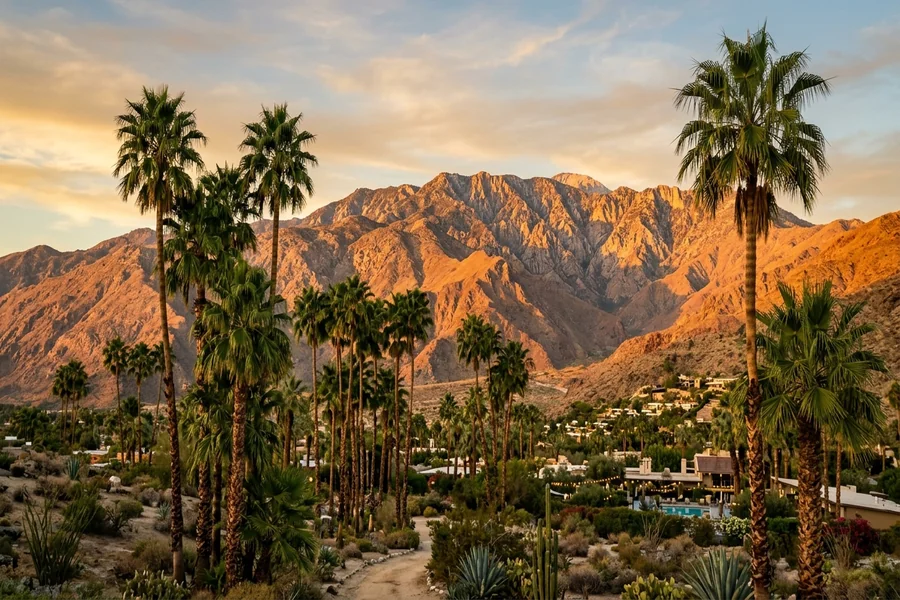
Palm Springs sits in a pocket of the Coachella Valley where the San Jacinto Mountains meet the desert floor. The scale is small, the light is strong, and the pace rewards travelers who plan loosely and move slowly.
If you have never visited before, the city reads differently depending on which neighborhood you base yourself in. A short orientation up front saves a lot of guesswork on the ground.
How the Neighborhoods Line Up
Downtown stretches along Palm Canyon Drive and holds most of the restaurants, galleries, and the Thursday night street fair. It is the easiest area for walking and for using the city at dinner hours.
South of downtown, the Historic Tennis Club and Old Las Palmas neighborhoods are quieter, with mid-century homes shaded by date palms. Travelers who want to split their time between walkable blocks and private backyards often look at vacation homes in Palm Springs in these pockets.
Further out, the Movie Colony and Deepwell neighborhoods lean residential and tend to come with pools, mountain views, and a bit more space. They are quiet in the evenings and work well for groups traveling together.
Weather Windows Through the Year
The season shapes almost everything about a Palm Springs trip. Between November and April the daytime temperatures land in a comfortable range, usually 70 to 85 degrees, with cool evenings that call for a layer.
May and October are shoulder months. The afternoons can touch 95, but mornings and evenings are pleasant, and crowds thin out noticeably compared to the peak festival weeks.
Summer runs hot. July and August routinely clear 105 degrees, which closes most outdoor hiking windows to sunrise and sunset. Travelers who visit in summer typically plan around a pool and move indoors from late morning to early evening.
Festival Weeks to Know About
Modernism Week in February and the Coachella Valley Music Festival in April drive the biggest demand spikes. Rates climb, dinner reservations tighten, and traffic on Highway 111 slows down considerably.
If festivals are not the point of your trip, the weeks on either side offer the same weather with far less friction.
Getting Around Once You Arrive
Palm Springs International Airport sits inside the city limits and is unusually easy to use. From the gate to a rental car counter is a short walk, and most neighborhoods are within a fifteen minute drive.
A car is the practical default. Public transit exists but runs on a limited schedule, and attractions in Joshua Tree, Pioneertown, and the Salton Sea are only reachable by road.
For travelers who plan to stay within one neighborhood, biking is a reasonable alternative. The grid is flat, and most streets have shoulders. Golf carts are also legal on some residential roads.
Food, Trails, and the Rhythm of a Day
Breakfast tends to run long and casual. Patios open early, coffee shops cluster around downtown, and the dry morning air makes outdoor seating comfortable most of the year.
Hikes near town are short and steep. The Museum Trail climbs directly up the mountain face from downtown, and Tahquitz Canyon offers a shaded loop with a waterfall at the back. Both are ideal before 9 a.m. in warmer months.
Afternoons are built for pools, shade, and slow lunches. Dinner reservations tighten after 7 p.m. during peak season, and many of the smaller restaurants are closed one or two days a week, so a quick check before you walk over is worth the minute.
A Few Practical Notes
Water is the easiest thing to underestimate. The desert air pulls moisture out quickly, and a half liter per hour is a sensible baseline when you are outside.
Dress is relaxed almost everywhere. Even the higher end restaurants read as resort casual, and layers matter more for air conditioning than for the weather.
Finally, timing your visit around a weekday arrival often makes the trip easier. Weekend crowds are predictable, and arriving on a Sunday or Monday gives you two or three quiet days before the rhythm picks up again.

Hi, I’m Tony — a passionate blogger with over 3 years of experience in writing informative and accurate content. I specialize in sharing practical insights on sizes, measurements, and spatial guides to help readers make confident decisions. Through DimensionsPoint.com, I aim to simplify complex data into easy-to-understand content that’s reliable, useful, and SEO-friendly.
When I’m not writing, I’m researching the latest trends in measurement standards and user needs to keep my content relevant and up to date.