
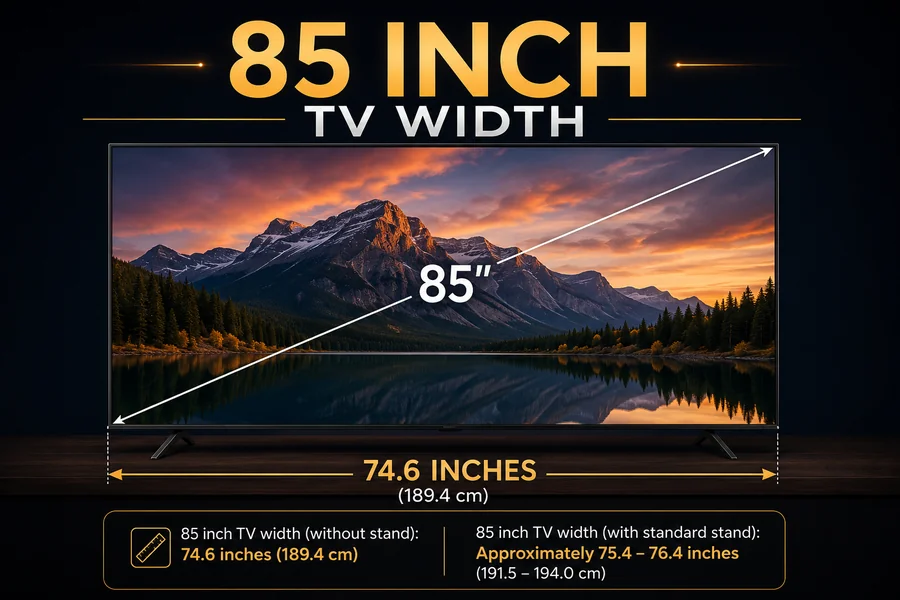
In the store, an 85 inch TV looks great. It’s another matter in your living room. The screen name is not the name, it’s the diagonal – it’s not what you need to know: how much wall or console space you’re giving up.
This is where 85 inch tv width comes in. Actually, width is the number which determines whether the TV will fit through your door, stand on your television stand, or take over your little room. If you don’t do this, you’ll be the one taking the post-meals measurements after the delivery guys are gone.
Here is the true width, the variation in width by brand, and how to verify the width even prior to the purchase.
How Wide Is an 85 Inch TV?
Here’s the short answer:
- Width: about 74.1 inches (188.2 cm)
- Height: about 41.7 inches (105.9 cm)
- Diagonal: 85 inches (215.9 cm), which is where the “85 inch” name comes from
- Aspect ratio: 16:9, the standard for nearly every TV sold today
So when people search 85 inch tv width, this is the number that matters — 74 inches across, not 85. That gap catches a lot of buyers off guard.
Quick Reference: 85 Inch TV At a Glance
| Detail | Answer |
| Standard width | 74.1 in (188.2 cm) |
| Standard height | 41.7 in (105.9 cm) |
| Diagonal | 85 in (215.9 cm) |
| Aspect ratio | 16:9 |
| Average weight | 60–100 lbs |
| Recommended stand width | 75+ inches |
| Ideal viewing distance | 8.5–14 feet |
| Wall space needed | 78+ inches with margin |
How Wide Is an 85 Inch TV Visually?
Numbers don’t mean much until you picture them. Try this instead:
- Two dining chairs pushed side by side
- A sofa without the armrests
- Roughly two standard interior doors laid flat, edge to edge
- Two adults standing shoulder to shoulder with arms slightly out
Once you connect 74 inches to something you already know, the size stops being abstract. It’s big — bigger than most people expect until they see it against a real wall.
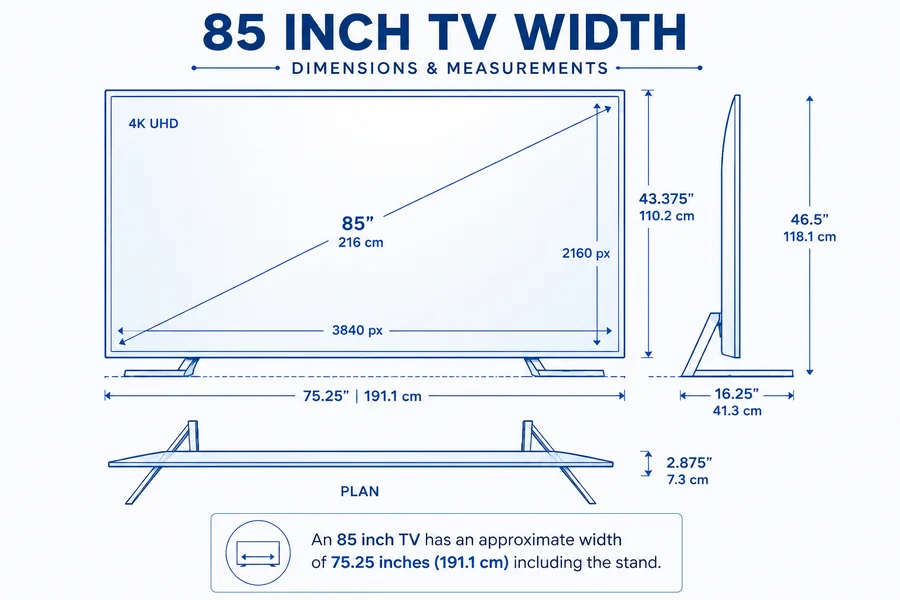
85 Inch TV Dimensions in Different Units (Conversion Table)
| Measurement | Value | Notes |
| Width (inches) | 74.1 in | Screen panel only |
| Width (cm) | 188.2 cm | Metric conversion |
| Height (inches) | 41.7 in | Screen panel only |
| Height (cm) | 105.9 cm | Metric conversion |
| Diagonal | 85 in / 215.9 cm | The number in the product name |
| Width with stand | 75–76 in | Varies by brand |
| Weight | 60–100 lbs | Without stand or mount |
| Viewing distance | 8.5–14 ft | Based on 16:9 ratio |
85 Inch TV Width By Brand and Model
The 74-inch figure is a baseline, not a guarantee. Bezel design and stand shape shift the real number a little from one brand to the next. Here’s how it breaks down.
Samsung 85 Inch TV Width
- Panel only: 74.6 inches
- With stand: 75.2 inches
- Bezels run thin across Samsung’s QLED and Neo QLED lines, so the panel stays close to the theoretical width
Mounting on a wall? You only need the panel number. Setting it on furniture? Check the stand footprint too — Samsung’s legs sit close together, so most 75-inch-rated consoles work fine.
LG 85 Inch TV Width
- Panel only: 74.5 inches
- With stand: 73–76 inches, depending on the series
LG leans on a dual-leg stand rather than a single center pedestal at this size. If your console top is on the narrow side, pull up the exact stand span for your model first. A three-inch mismatch is enough to leave the TV hanging off the edge.
Sony 85 Inch TV Width
- Panel only: 74.6 inches
- With stand: closer to 76 inches
Sony builds sturdier dual-foot stands for its larger Bravia sets, which pushes the base width a bit wider than competitors. Worth checking if your table has a hard size limit.
TCL and Hisense 85 Inch TVs Width
- Panel only: 74–74.5 inches
- With stand: 72–75 inches
Budget brands keep things simple here — no oversized bezels, no unusual stand shapes. That makes them a safe bet for most standard TV consoles already in your home.
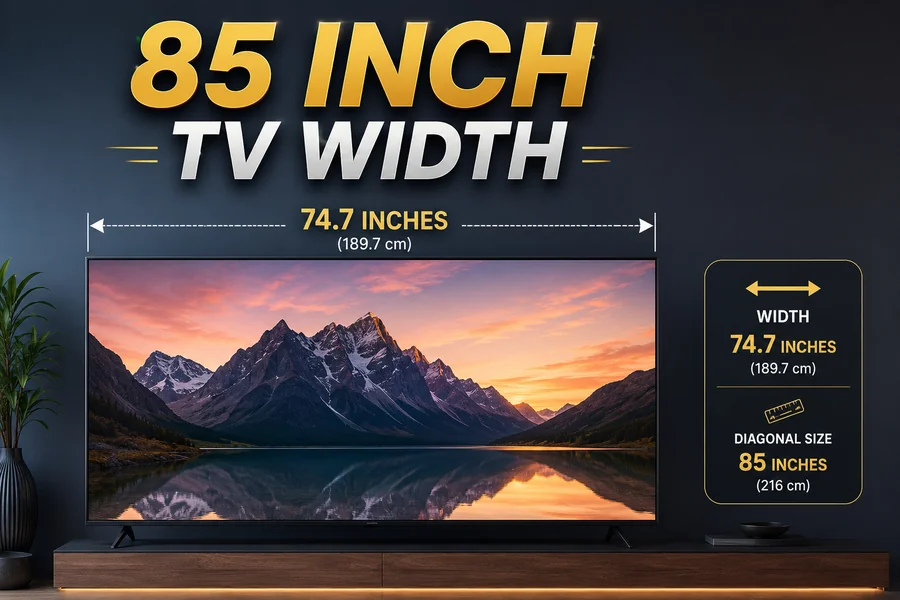
How to Measure TV Width Without a Tape Measure
No tape measure on hand? A few workarounds:
- Use a doorframe as reference — most run 32 to 36 inches wide, so two side by side gets you close to 74 inches
- Line up painter’s tape across your wall in rough sections using books or boxes as spacers
- Step back after taping it out and see how it actually fills the space
It’s not exact, but it’s enough to catch a problem before delivery day instead of after.
Why Knowing 85 Inch TV Width Matters in Real Life
This is where most people get burned. A few common ways it goes wrong:
- Delivery gets refused because the box won’t clear a hallway
- Wall mount goes up too close to a window or light switch
- Stand turns out too narrow, so the TV overhangs the edge
- Room ends up feeling cramped because nobody checked clearance first
None of that happens if you know the real 85 inch tv dimensions ahead of time. A few minutes with a tape measure now beats a restocking fee and a wasted Saturday later.
FAQs:
How wide is an 85 inch TV?
About 74 inches (188 cm) wide, not counting the stand.
How tall is an 85 inch TV?
Roughly 41.7 inches (106 cm) for standard 16:9 models.
Will an 85 inch TV fit on a 70 inch stand?
No. Most need a stand at least 74 to 76 inches wide.
How much space do I need for an 85 inch TV?
Leave 8.5 to 14 feet of viewing distance, and make sure your wall or console clears 75 inches.
Does 85 inch TV width include the stand?
No. That’s the panel only. Add a few inches if the stand legs extend past the screen edges.
Conclusion
The real 85 inch tv width lands around 74 inches for the panel, a bit more once the stand is attached. That’s a serious chunk of wall space, which is exactly why it’s worth measuring before you order rather than after the box shows up at your door.
Confirm your wall, confirm your console, confirm your doorway clearance. Do that, and an 85-inch screen turns into exactly what you wanted — a proper home theater, not a return shipment.

Hi, I’m Tony — a passionate blogger with over 3 years of experience in writing informative and accurate content. I specialize in sharing practical insights on sizes, measurements, and spatial guides to help readers make confident decisions. Through DimensionsPoint.com, I aim to simplify complex data into easy-to-understand content that’s reliable, useful, and SEO-friendly.
When I’m not writing, I’m researching the latest trends in measurement standards and user needs to keep my content relevant and up to date.