
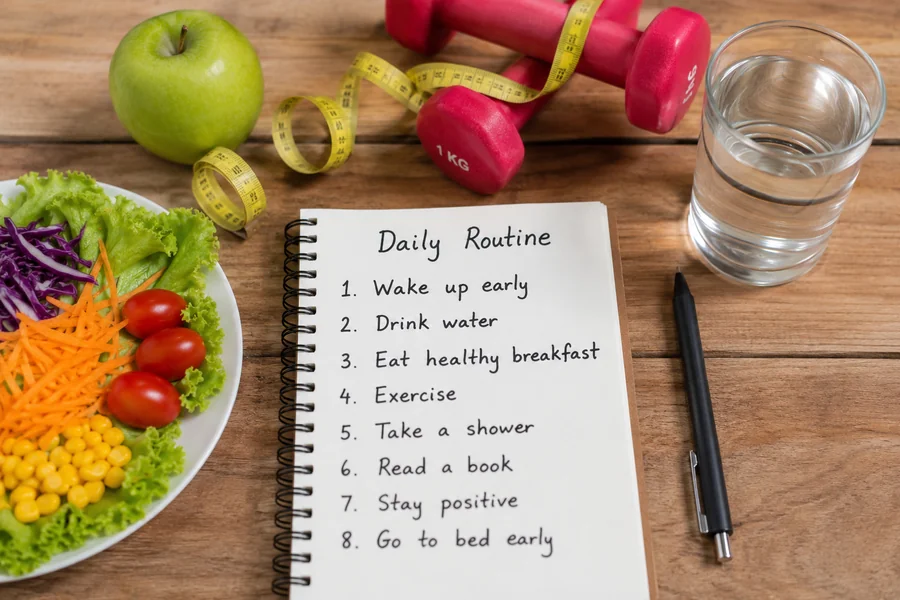
Starting a new routine often begins with a burst of motivation. Whether it is a fresh start after a major life transition or a decision to prioritize your health, enthusiasm runs high initially. Yet, within weeks, many people find themselves slipping back into old patterns.
The secret to long-term consistency isn’t sheer willpower; it is smart design. Building healthy routines from the ground up by focusing on small, sustainable behaviors rather than drastic overhauls ensures those changes stick for life.
Here is a practical framework to help you establish lasting health habits from the very beginning.
1. Start with Micro-Habits to Beat Friction
Quick Summary: Reduce new habits to two-minute micro-actions to lower mental resistance and build momentum before increasing difficulty.
When starting fresh, the biggest obstacle is initial resistance. Attempting to workout for an hour every day or overhaul your diet overnight overwhelms your mental bandwidth.
Instead, shrink your new habit until it feels effortless. If you want to build an exercise routine, start by committing to two minutes of stretching every morning. If you want to read more, commit to one page a night. Focusing on consistency over intensity during the first few weeks establishes the neural pathway of the habit. Once the behavior becomes automatic, scaling up required effort becomes much easier.
2. Anchor New Behaviors with Habit Stacking
Quick Summary: Connect a desired new habit to an established daily behavior using a predictable “After [Current Habit], I will [New Habit]” formula.
Relying on vague intentions like “I’ll exercise more today” rarely works. Your brain naturally thrives on established triggers and contextual cues.
Utilizing habit stacking techniques pairs a new behavior with an existing daily anchor. For example:
- After I pour my morning coffee, I will drink a full glass of water.
- After I brush my teeth at night, I will lay out my clothes for the morning.
- After I sit down at my desk, I will take three deep breaths to focus.
By attaching new actions to established anchors, you eliminate decision fatigue and make the new routine feel like a natural extension of your day.
3. Prioritize Core Pillars in Your Daily Wellness Routines
Quick Summary: Focus on the foundational pillars—sleep hygiene, movement, and nutrition—before adding complex wellness practices.
When designing daily wellness routines, it is easy to get distracted by complex wellness trends. However, elaborate routines mean little if your foundational health pillars are unstable.
Focus on mastering these core pillars first:
- Sleep Consistency: Go to bed and wake up at similar times daily to regulate your body clock.
- Functional Movement: Incorporate 20 to 30 minutes of movement, such as walking or strength training.
- Hydration and Whole Foods: Drink adequate water throughout the day and center meals around nutrient-dense foods.
Mastering these basics provides the energy and mental clarity required to sustain every other habit you build.
4. Embed Preventive Health and Personal Care
Quick Summary: Integrate proactive health checkups, daily hygiene, and protective habits into your routine to prevent health crises before they start.
Healthy routines are not just about adding new activities; they are also about protecting your long-term well-being through preventative care. Establishing preventive health care habits—like daily flossing, skin protection, and annual checkups—saves time, money, and discomfort in the long run.
However, even with meticulous preventive routines, unexpected health disruptions occur. An accidental fall during a morning run or a sudden tooth fracture can catch anyone off guard. In these moments, having a response plan matters just as much as your daily habits. Knowing where to find a reliable emergency dentist in Orem or urgent care clinic ensures you address unexpected injuries quickly without derailing your health journey.
5. Overcome the “All-or-Nothing” Mindset
Quick Summary: Consistency is built on resilience, not perfection. Missing a single day will not break a habit, but giving up after a mistake will.
One of the most common reasons people abandon new routines is the all-or-nothing trap. Missing a workout often triggers guilt, leading people to discard the entire routine.
Myth vs. Fact: Habit Building
| Common Myth | Operational Fact |
| “It takes 21 days to form a habit.” | Habit formation varies widely, taking 18 to 254 days depending on complexity. |
| “Missing one day resets your progress.” | Studies show that missing a single day has no measurable impact on long-term retention. |
| “Willpower is the key to discipline.” | Environment design and habit stacking matter far more than willpower alone. |
Adopt the “Never Miss Twice” rule. If life interferes and you miss a day, focus entirely on resuming the habit the very next day. This keeps momentum alive and prevents temporary slips from becoming permanent declines.
Simple Habit-Building Checklist
- [ ] Is the habit small enough to complete in under five minutes?
- [ ] Is there a clear daily anchor trigger attached to the new habit?
- [ ] Is your environment organized to make the habit easy to start?
- [ ] Do you have a plan for how to handle missed days gracefully?
- [ ] Are you tracking your consistency visually on a calendar?
Sustainable Growth Starts Today
Building healthy routines from the very beginning is a journey of identity shift rather than instant transformation. By starting with micro-habits, anchoring new behaviors to existing routines, prioritizing core wellness pillars, and letting go of perfectionism, you create systems that support your health for a lifetime. True progress comes from small, deliberate choices repeated consistently over time.

Hi, I’m Tony — a passionate blogger with over 3 years of experience in writing informative and accurate content. I specialize in sharing practical insights on sizes, measurements, and spatial guides to help readers make confident decisions. Through DimensionsPoint.com, I aim to simplify complex data into easy-to-understand content that’s reliable, useful, and SEO-friendly.
When I’m not writing, I’m researching the latest trends in measurement standards and user needs to keep my content relevant and up to date.